Semicon India 2026: चीन की कंपनियों की एंट्री से क्यों बढ़ी हलचल? भारत के Chip Mission पर क्या होगा असर
Semicon India 2026 से पहले semiconductor sector में एक नया बदलाव चर्चा में है। कुछ Chinese companies और suppliers भारत के बड़े chip-industry event में trade participation की संभावना तलाश रहे हैं। ऐसे समय में जब भारत domestic semiconductor manufacturing को तेजी से बढ़ा रहा है, यह घटनाक्रम technology, imports, investment और India-China business relations के लिए क्यों महत्वपूर्ण है, समझें पूरी कहानी।
भारत की semiconductor story में एक नया और दिलचस्प मोड़ सामने आया है। सितंबर में होने वाले Semicon India 2026 से पहले Chinese semiconductor और electronics-component companies की संभावित भागीदारी को लेकर चर्चा तेज हो गई है।
यह घटनाक्रम ऐसे समय सामने आया है जब भारत अपनी semiconductor supply chain को मजबूत करने और imported components पर निर्भरता कम करने के लिए बड़े स्तर पर investment कर रहा है।
एक तरफ भारत domestic chip manufacturing, packaging, testing और design ecosystem तैयार करने की कोशिश कर रहा है, वहीं दूसरी तरफ electronics manufacturing के तेज विस्तार ने components की मांग इतनी बढ़ा दी है कि supply chain में imports की भूमिका अभी भी काफी बड़ी है।
इसी gap ने Chinese suppliers के लिए भी भारतीय market में संभावित commercial opportunity पैदा की है। उपलब्ध जानकारी के अनुसार कुछ Chinese companies Semicon India 2026 में trade delegates के तौर पर शामिल होने में रुचि दिखा रही हैं, हालांकि उन्हें exhibitors के रूप में शामिल होने की पुष्टि नहीं हुई है।
यह कहानी इसलिए महत्वपूर्ण है क्योंकि इसके पीछे सिर्फ एक technology event नहीं, बल्कि भारत के electronics manufacturing boom, semiconductor self-reliance और China के साथ technology trade का बड़ा सवाल जुड़ा है।
Semicon India 2026 में क्या नया होने वाला है?
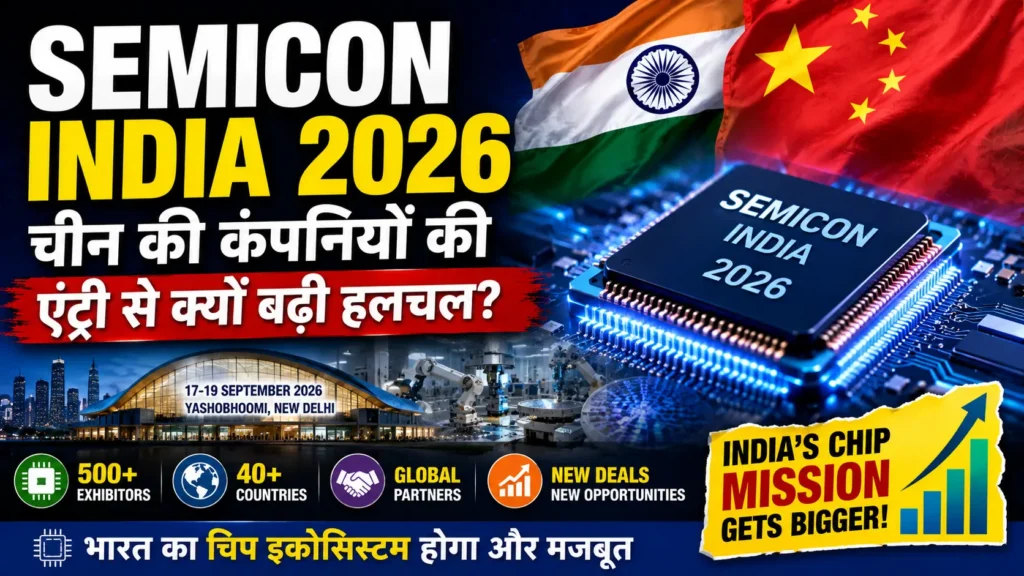
Semicon India का पांचवां edition 17 से 19 सितंबर 2026 तक नई दिल्ली के Yashobhoomi में आयोजित होगा।
इस बार event का theme है:
“Silicon to Systems: Building the Ecosystem”
कार्यक्रम में semiconductor industry के लगभग पूरे value chain को एक साथ लाने की योजना है।
इसमें chip design से लेकर manufacturing, packaging, equipment, materials, electronics systems, research और talent development तक अलग-अलग segments शामिल हैं।
कार्यक्रम में 500 से अधिक exhibitors, 243 international companies और 40 से ज्यादा देशों के participants के शामिल होने की जानकारी दी गई है।
यानी भारत अब semiconductor sector को केवल chip fabrication तक सीमित नहीं रखना चाहता।
लक्ष्य एक ऐसा ecosystem बनाना है जिसमें chip बनने से लेकर उसके final electronic product में इस्तेमाल होने तक की पूरी chain देश में विकसित हो।
Chinese Companies की संभावित Entry क्यों महत्वपूर्ण है?
भारत की semiconductor policy का एक बड़ा उद्देश्य foreign supply chains पर dependency कम करना है।
लेकिन semiconductor industry इतनी complex है कि किसी भी देश के लिए पूरी supply chain अकेले तैयार करना आसान नहीं है।
Chip manufacturing के लिए सिर्फ semiconductor fab पर्याप्त नहीं होता।
इसके साथ चाहिए:
- specialised chemicals
- silicon wafers
- manufacturing equipment
- testing machines
- packaging materials
- electronic components
- precision tools
- industrial gases
- advanced machinery
यही वजह है कि भारत domestic manufacturing बढ़ाने के साथ-साथ global suppliers को भी अपने ecosystem से जोड़ना चाहता है।
Chinese companies की संभावित trade participation इसी larger picture में देखी जा सकती है।
क्या Chinese Companies Semicon India 2026 में Exhibitor होंगी?
फिलहाल ऐसा कहना सही नहीं होगा कि Chinese companies बड़े official exhibitors के रूप में event में शामिल हो रही हैं।
ताजा जानकारी के अनुसार कुछ Chinese suppliers की trade delegates के रूप में भाग लेने में रुचि सामने आई है।
इसका मतलब यह है कि companies भारतीय semiconductor और electronics market में business opportunities को समझना चाहती हैं।
यह distinction महत्वपूर्ण है क्योंकि trade delegation और official exhibition participation एक ही चीज नहीं हैं।
भारत में Chinese Semiconductor Suppliers की दिलचस्पी क्यों बढ़ रही है?
इसके पीछे सबसे बड़ा कारण है India का तेजी से बढ़ता electronics manufacturing sector।
भारत में mobile phones, electronics hardware, automotive electronics, telecom equipment और दूसरे technology products की manufacturing तेजी से बढ़ी है।
इसके साथ semiconductor और electronic components की demand भी बढ़ी है।
Domestic production capacity अभी पूरी supply chain की जरूरत पूरी करने की स्थिति में नहीं है।
इसलिए कई components अभी भी imported supply chains से आते हैं।
यही वह market है जहां Chinese suppliers को business opportunity दिखाई दे रही है।
भारत का Electronics Manufacturing Sector कितना बढ़ा है?
सरकार के अनुसार भारत में electronics production में पिछले एक दशक में बहुत तेज वृद्धि हुई है।
2014-15 में electronics goods production लगभग ₹1.9 लाख करोड़ था।
2024-25 तक यह बढ़कर लगभग ₹12 लाख करोड़ हो गया।
यानी करीब एक दशक में production value में लगभग छह गुना वृद्धि हुई।
यह growth semiconductor demand के लिए भी महत्वपूर्ण है।
जितने ज्यादा phones, computers, vehicles, telecom products और electronic systems भारत में बनेंगे, उतनी ही ज्यादा chips और components की जरूरत होगी।
भारत सिर्फ Chip Factory क्यों नहीं बनाना चाहता?
अगर भारत केवल semiconductor fabrication plants बना ले और बाकी जरूरी equipment तथा components के लिए फिर भी imports पर निर्भर रहे, तो supply-chain risk पूरी तरह खत्म नहीं होगा।
इसीलिए government strategy में semiconductor ecosystem के कई layers शामिल हैं।
इसमें:
Chip Design
भारत में semiconductor design talent पहले से मजबूत है। अब domestic startups और companies को commercial chip development की दिशा में आगे बढ़ाया जा रहा है।
Fabrication
यह सबसे complex और capital-intensive stage है, जिसमें silicon wafers पर semiconductor circuits तैयार किए जाते हैं।
Packaging
Chip बनने के बाद उसे package करना जरूरी होता है ताकि वह electronic device में इस्तेमाल किया जा सके।
Testing
Manufactured chips को अलग-अलग operating conditions में test किया जाता है।
Equipment और Materials
Semiconductor plants के लिए specialised equipment और materials की जरूरत होती है।
भारत की policy अब इन सभी layers को जोड़ने की कोशिश कर रही है।
Semicon 2.0 क्या है?
भारत ने semiconductor sector को अगले phase में ले जाने के लिए Semicon 2.0 को मंजूरी दी है।
इस programme का कुल budget outlay लगभग ₹1.27 लाख करोड़ है।
इसका उद्देश्य सिर्फ existing projects को support करना नहीं बल्कि semiconductor ecosystem को long-term आधार देना है।
इसमें design, manufacturing, materials, packaging, supply chain और talent development जैसे क्षेत्रों को आगे बढ़ाने पर जोर है।
यही वजह है कि Semicon India 2026 इस समय केवल एक industry exhibition नहीं रह गया है।
यह भारत की broader semiconductor strategy का showcase बन गया है।
भारत में Semiconductor Projects पर कितना Investment हो रहा है?
सरकारी आंकड़ों के अनुसार Semicon India Programme के तहत कई projects को approval मिल चुका है।
2026 की शुरुआत तक approved projects में लगभग ₹1.6 लाख करोड़ के investment commitments का उल्लेख किया गया था, जिसमें fabs और packaging units शामिल हैं।
इसके अलावा 2026 में दो और semiconductor manufacturing projects को करीब ₹3,936 करोड़ के cumulative investment के साथ मंजूरी दी गई थी।
इन projects से हजारों skilled jobs पैदा होने की उम्मीद जताई गई है।
इससे स्पष्ट है कि भारत semiconductor manufacturing को केवल strategic technology project नहीं बल्कि industrial growth engine के रूप में भी देख रहा है।
फिर भी China से Components क्यों मंगाने पड़ रहे हैं?
यह semiconductor ecosystem की सबसे बड़ी practical challenges में से एक है।
एक semiconductor plant बनाना और पूरी supply chain तैयार करना दो अलग चीजें हैं।
मान लीजिए भारत में कोई company chip packaging plant शुरू करती है।
उसे फिर भी कई specialised machines, chemicals, materials और components की जरूरत हो सकती है।
अगर इनका domestic production उपलब्ध नहीं है, तो company को imports पर निर्भर रहना पड़ेगा।
इसीलिए भारत के लिए semiconductor self-reliance का मतलब यह नहीं है कि अगले कुछ वर्षों में हर component देश में ही बनाया जाएगा।
वास्तविक लक्ष्य dependency को धीरे-धीरे कम करना और critical areas में domestic capacity बढ़ाना है।
क्या Chinese Companies की Entry भारत के लिए खतरा है?
इसका जवाब सीधा हां या नहीं में नहीं दिया जा सकता।
एक तरफ भारत strategic technologies में China पर dependency कम करना चाहता है।
दूसरी तरफ semiconductor supply chain global है और components की competitive pricing तथा availability भी महत्वपूर्ण हैं।
अगर Chinese suppliers भारतीय market में आते हैं, तो companies को competitive prices और broader supplier options मिल सकते हैं।
लेकिन sensitive technology और strategic components के मामले में security considerations ज्यादा महत्वपूर्ण हो जाते हैं।
इसलिए आने वाले समय में भारत को economic opportunity और national security के बीच संतुलन बनाना होगा।
क्या China की कंपनियों को भारत में खुली छूट मिलेगी?
ऐसा मानना सही नहीं होगा।
भारत में foreign companies के लिए sector-specific rules, security screening और investment regulations लागू हो सकते हैं।
Technology की nature और company की activity के अनुसार अलग-अलग regulatory requirements भी हो सकती हैं।
इसलिए Semicon India 2026 में किसी Chinese business delegation की संभावित मौजूदगी को “भारत ने semiconductor sector China के लिए खोल दिया” जैसे निष्कर्ष से जोड़ना जल्दबाजी होगी।
India-China Technology Trade में नया Chapter?
इस development का एक geopolitical angle भी है।
भारत और चीन के बीच कई क्षेत्रों में strategic competition है, लेकिन दोनों देशों के बीच व्यापारिक संबंध पूरी तरह खत्म नहीं हुए हैं।
Technology और electronics supply chains में China की manufacturing capability अभी भी बहुत बड़ी है।
भारत अपनी domestic capacity बढ़ा रहा है, लेकिन transition के दौरान कुछ Chinese suppliers के साथ commercial interaction जारी रह सकता है।
यही कारण है कि semiconductor sector में आने वाले developments को सिर्फ business story या सिर्फ geopolitical story के रूप में देखना पर्याप्त नहीं होगा।
यह दोनों का मिश्रण है।
Semicon India 2026 में किन देशों की बड़ी मौजूदगी होगी?
Semicon India 2026 में कई international semiconductor ecosystems की भागीदारी देखने को मिलेगी।
Official event information के अनुसार Japan, South Korea, Singapore, Malaysia, Germany और Netherlands के international pavilions भी शामिल होंगे।
इसके अलावा global semiconductor value chain की कई बड़ी companies event में मौजूद रहेंगी।
इससे भारत के लिए international suppliers, investors और technology partners से direct engagement का अवसर बनेगा।
भारत के Semiconductor Mission में PM की भूमिका क्यों महत्वपूर्ण है?
Semicon India 2026 का उद्घाटन 17 सितंबर को प्रधानमंत्री नरेंद्र मोदी करेंगे।
इसके साथ global semiconductor CEOs के साथ discussions और industry interactions भी कार्यक्रम का हिस्सा होंगे।
इससे संकेत मिलता है कि semiconductor manufacturing को सरकार national industrial policy के एक महत्वपूर्ण हिस्से के रूप में देख रही है।
क्या Semicon India 2026 से नए Investment Deals आ सकते हैं?
ऐसी संभावना जरूर है।
ऐसे बड़े industry events में companies:
- technology partnerships
- supplier agreements
- manufacturing proposals
- investment discussions
- equipment deals
- research collaborations
जैसे विषयों पर बातचीत करती हैं।
हालांकि event में participation को सीधे investment announcement मानना सही नहीं होगा।
किसी company का event में आना और भारत में plant लगाने का final decision दो अलग stages हैं।
Semiconductor Jobs पर क्या असर पड़ेगा?
भारत का semiconductor expansion केवल engineers के लिए jobs नहीं बनाएगा।
इस sector में अलग-अलग प्रकार की skilled manpower की आवश्यकता होगी।
उदाहरण के लिए:
- Semiconductor engineers
- Process engineers
- Equipment specialists
- Quality engineers
- Packaging experts
- Testing professionals
- Materials specialists
- Chemical engineers
- Data and automation experts
- Semiconductor technicians
इसके अलावा logistics, construction, facility management और industrial services में भी indirect employment पैदा हो सकता है।
क्या भारत Semiconductor Manufacturing में China को पीछे छोड़ सकता है?
अभी ऐसा दावा करना जल्दबाजी होगा।
China ने semiconductor और electronics manufacturing में कई दशकों में विशाल ecosystem बनाया है।
भारत अभी ecosystem-building phase में है।
लेकिन भारत के पास कुछ महत्वपूर्ण advantages हैं:
- बड़ा domestic market
- engineering talent
- growing electronics manufacturing
- government incentives
- global companies की interest
- geopolitical diversification की global demand
अगर ये factors लंबे समय तक साथ काम करते हैं तो भारत semiconductor supply chain में एक महत्वपूर्ण manufacturing hub बन सकता है।
India Semiconductor Mission की सबसे बड़ी चुनौती क्या है?
सबसे बड़ी चुनौती केवल पैसा नहीं है।
Semiconductor manufacturing में execution बेहद कठिन होता है।
एक fab को:
- uninterrupted power
- high-quality water
- ultra-clean manufacturing environment
- advanced machinery
- specialised chemicals
- highly trained workforce
- reliable logistics
की जरूरत होती है।
इसके अलावा semiconductor technology तेजी से बदलती है।
इसलिए आज बनाया गया plant आने वाले वर्षों में भी competitive रहे, इसके लिए continuous investment जरूरी होगा।
Semicon India 2026 का आम लोगों से क्या संबंध है?
पहली नजर में semiconductor industry आम consumer से दूर लग सकती है।
लेकिन वास्तव में chips लगभग हर modern product में मौजूद हैं।
आपका smartphone, car, laptop, television, washing machine, payment terminal, telecom network और कई medical devices semiconductor technology पर निर्भर हैं।
अगर भारत domestic semiconductor capacity बढ़ाता है, तो long-term में supply security मजबूत हो सकती है।
इससे electronics manufacturing ecosystem को भी support मिल सकता है।
क्या इससे भारत में बने Smartphones और Electronics ज्यादा बढ़ेंगे?
संभावना है।
अगर semiconductor और component supply chain भारत में मजबूत होती है, तो electronics manufacturers को local sourcing के ज्यादा विकल्प मिल सकते हैं।
इससे production planning आसान हो सकती है और global supply disruptions का असर कम किया जा सकता है।
हालांकि smartphone या electronic product की final price पर इसका असर कई factors पर निर्भर करेगा।
Semicon India 2026 में Chinese Participation का सबसे बड़ा मतलब क्या है?
इस पूरे घटनाक्रम को तीन स्तरों पर समझना चाहिए।
पहला — Market Opportunity
भारत का electronics market इतना बड़ा हो रहा है कि global component suppliers यहां business opportunity देख रहे हैं।
दूसरा — Supply Chain Reality
भारत domestic semiconductor production बढ़ा रहा है, लेकिन पूरी supply chain अभी तैयार नहीं हुई है।
तीसरा — Strategic Balancing
भारत को domestic manufacturing बढ़ाते हुए foreign suppliers और strategic technology risks के बीच संतुलन बनाना होगा।
यही तीनों बातें आने वाले वर्षों में भारत की semiconductor policy को प्रभावित कर सकती हैं।
Semicon India 2026 की महत्वपूर्ण तारीखें
| जानकारी | तारीख / स्थिति |
|---|---|
| Event | Semicon India 2026 |
| तारीख | 17–19 सितंबर 2026 |
| स्थान | Yashobhoomi, New Delhi |
| Theme | Silicon to Systems: Building the Ecosystem |
| Edition | 5वां |
| उद्घाटन | 17 सितंबर 2026 |
| Expected Exhibitors | 500+ |
| International Companies | 243 |
| Participating Countries | 40+ |
| Semicon 2.0 Budget | ₹1.27 लाख करोड़ |
| Chinese Participation | Trade participation में संभावित interest |
Official event details के अनुसार कार्यक्रम 17–19 सितंबर को Yashobhoomi में होगा और global semiconductor ecosystem की बड़ी भागीदारी होगी।
अब आगे क्या होगा?
अब सबसे ज्यादा नजर सितंबर में होने वाले Semicon India 2026 पर रहेगी।
अगर Chinese suppliers वास्तव में trade delegates के रूप में शामिल होते हैं, तो यह भारत के semiconductor market में उनकी commercial interest का एक संकेत होगा।
लेकिन इससे भी ज्यादा महत्वपूर्ण होगा कि event के दौरान कौन से investment proposals, technology partnerships और supply agreements सामने आते हैं।
भारत के लिए असली सफलता केवल बड़े event आयोजित करने में नहीं होगी।
सफलता तब मानी जाएगी जब semiconductor ecosystem में:
- ज्यादा chips design हों,
- ज्यादा components भारत में बनें,
- fabs commercial production बढ़ाएं,
- packaging capacity बढ़े,
- domestic suppliers विकसित हों,
- skilled workforce तैयार हो,
- और imported critical components पर dependency धीरे-धीरे कम हो।
Semicon India 2026 FAQs
Semicon India 2026 कब होगा?
Semicon India 2026 का आयोजन 17 से 19 सितंबर 2026 तक नई दिल्ली के Yashobhoomi में होगा।
Semicon India 2026 में Chinese companies क्यों दिलचस्पी ले रही हैं?
भारत में electronics और semiconductor components की demand तेजी से बढ़ रही है। इसी बढ़ती market opportunity को देखते हुए कुछ Chinese suppliers event में trade participation की संभावना तलाश रहे हैं।
क्या Chinese companies Semicon India 2026 में exhibitors होंगी?
उपलब्ध जानकारी के अनुसार Chinese companies की trade delegates के रूप में भागीदारी में रुचि सामने आई है। उन्हें official exhibitors के रूप में शामिल किए जाने की पुष्टि नहीं हुई है।
भारत का Semicon 2.0 क्या है?
Semicon 2.0 भारत का expanded semiconductor programme है, जिसके लिए लगभग ₹1.27 लाख करोड़ का budget outlay मंजूर किया गया है। इसका उद्देश्य semiconductor design और manufacturing ecosystem को लंबे समय तक मजबूत करना है।
भारत Semiconductor Manufacturing पर इतना जोर क्यों दे रहा है?
Semiconductor chips smartphones, cars, computers, telecom equipment, industrial machines और कई दूसरे modern products के लिए जरूरी हैं। Domestic manufacturing बढ़ाने से supply-chain resilience और strategic technology capability मजबूत हो सकती है।
Semicon India 2026 का theme क्या है?
इस साल का theme “Silicon to Systems: Building the Ecosystem” है।
Semicon India 2026 में कितनी companies शामिल होंगी?
Official event information के अनुसार 500 से ज्यादा exhibitors और 40 से अधिक देशों की participation की योजना है।
क्या Semicon India से भारत में semiconductor jobs बढ़ेंगी?
Semiconductor fabs, packaging units, equipment manufacturing और design ecosystem के विस्तार से highly skilled engineering jobs के साथ technical और manufacturing roles भी बढ़ सकते हैं।
क्या Chinese semiconductor companies से भारत की self-reliance policy प्रभावित होगी?
जरूरी नहीं। Domestic manufacturing बढ़ाने और foreign suppliers के साथ commercial engagement एक साथ चल सकते हैं। असली लक्ष्य critical supply chains में excessive dependency को कम करना है।
क्या भारत semiconductor sector में China को टक्कर दे सकता है?
भारत semiconductor manufacturing में तेजी से investment कर रहा है, लेकिन China का existing ecosystem बहुत बड़ा और mature है। भारत के लिए realistic लक्ष्य global supply chain में एक महत्वपूर्ण और reliable manufacturing तथा design hub बनना है।
निष्कर्ष
Semicon India 2026 से पहले Chinese semiconductor suppliers की संभावित trade participation भारत की semiconductor story में एक नया dimension जोड़ती है।
यह घटनाक्रम दिखाता है कि भारत का electronics market अब इतना बड़ा हो चुका है कि global component suppliers यहां अपनी अगली growth opportunity देख रहे हैं। दूसरी तरफ भारत खुद semiconductor manufacturing और technology ecosystem को मजबूत करने के लिए बड़े स्तर पर investment और policy support दे रहा है।
यहां सबसे बड़ा सवाल यह नहीं है कि Chinese companies event में आएंगी या नहीं।
बड़ा सवाल यह है कि भारत अपनी बढ़ती electronics demand को किस हद तक domestic semiconductor ecosystem में बदल पाता है।
अगर fabs, packaging facilities, design companies, equipment suppliers और component manufacturers एक साथ scale करते हैं, तो भारत आने वाले वर्षों में global semiconductor supply chain का महत्वपूर्ण हिस्सा बन सकता है।
लेकिन इस transformation में समय लगेगा। Semiconductor industry में plant लगाने से लेकर commercial production, yield improvement और global-scale competitiveness तक कई कठिन चरण होते हैं।
इसीलिए सितंबर का Semicon India 2026 केवल एक exhibition नहीं होगा। यह इस बात का संकेत भी देगा कि भारत की semiconductor strategy अगले phase में किस दिशा में जा रही है—domestic manufacturing, global partnerships और strategic technology security के बीच संतुलन बनाते हुए।
और Chinese suppliers की संभावित interest इस larger story का सिर्फ एक हिस्सा है; असली कहानी भारत के तेजी से बढ़ते chip और electronics ecosystem की है।
About The Author