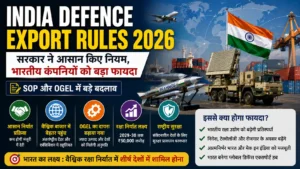
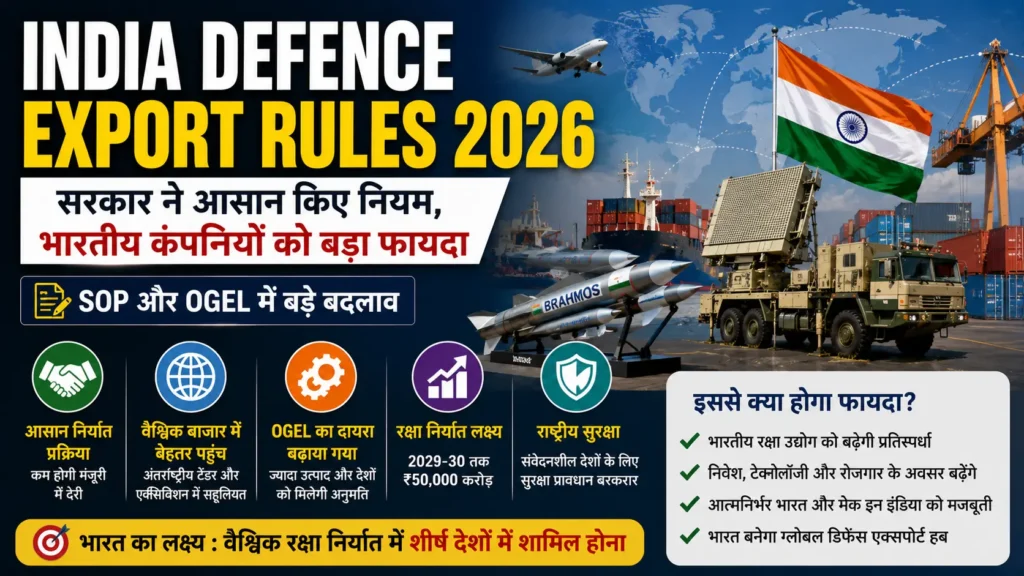
भारत की defence manufacturing industry के लिए अगस्त 2026 का आखिरी सप्ताह एक महत्वपूर्ण बदलाव लेकर आया है। सरकार ने Defence Export Standard Operating Procedure (SOP) और Open General Export Licence यानी OGEL framework को सरल बनाने के लिए कई regulatory reforms लागू किए हैं।
इन बदलावों का मुख्य उद्देश्य भारतीय defence manufacturers को विदेशी बाजारों में products और equipment बेचने के लिए पहले की तुलना में कम procedural hurdles का सामना करना पड़े।
सरकार का लक्ष्य केवल defence equipment का घरेलू उत्पादन बढ़ाना नहीं है। अब focus इस बात पर भी है कि भारत में बने defence products को ज्यादा तेजी से global markets तक पहुंचाया जाए।
नए framework में non-lethal defence items के export के लिए कई मामलों में stakeholder consultation की requirement हटाई गई है। International tenders और exhibitions से जुड़े exports के लिए भी प्रक्रिया को आसान बनाया गया है। साथ ही OGEL framework का दायरा बढ़ाने और licence-related flexibility देने की दिशा में बदलाव किए गए हैं।
यह बदलाव ऐसे समय आया है जब भारत अपने defence manufacturing ecosystem को global supply chain का हिस्सा बनाने पर जोर दे रहा है।
लेकिन सवाल यह है कि नए Defence Export Rules में आखिर क्या बदला है और इसका आम लोगों, defence companies और भारत की economy पर क्या असर पड़ेगा?
Defence Export Rules 2026 में क्या बड़ा बदलाव हुआ है?
नए reforms का सबसे महत्वपूर्ण हिस्सा procedural simplification है।
पहले कई defence export transactions में अलग-अलग सरकारी विभागों और stakeholders से consultation की जरूरत पड़ सकती थी।
अब कुछ categories में यह requirement कम या समाप्त की गई है।
विशेष रूप से non-lethal defence items को अधिकांश destinations पर export करने के लिए stakeholder consultation को हटाने का प्रावधान किया गया है, जबकि sensitive destinations के लिए safeguards बनाए रखे गए हैं।
इसका सीधा मतलब यह है कि eligible Indian companies को कुछ exports के लिए approval process पूरा करने में पहले की तुलना में कम procedural delay का सामना करना पड़ सकता है।
OGEL क्या है और इसका Defence Export से क्या संबंध है?
OGEL का पूरा नाम Open General Export Licence है।
यह एक ऐसा licensing mechanism है जिसके तहत eligible defence products को निर्धारित conditions के तहत approved destinations तक export करने की सुविधा मिलती है।
सामान्य export process में किसी transaction के लिए अलग-अलग authorisation और approvals की आवश्यकता हो सकती है।
OGEL framework इस प्रक्रिया को ज्यादा predictable और streamlined बनाने का प्रयास करता है।
भारत ने अब इसी framework का विस्तार किया है ताकि eligible defence manufacturers को international business opportunities पर तेजी से प्रतिक्रिया देने में मदद मिले।
नए OGEL Rules में क्या बदला है?
नए framework में OGEL की applicability और flexibility को बढ़ाया गया है।
कुछ महत्वपूर्ण बदलावों में:
- OGEL के तहत covered items का दायरा बढ़ाना
- eligible destinations का विस्तार
- licence validity में बदलाव
- repetitive authorisation requirements कम करना
- international tenders और exhibitions के लिए प्रक्रिया आसान करना
जैसे कदम शामिल हैं।
इसका उद्देश्य यह है कि Indian defence companies किसी foreign tender या business opportunity के सामने आने पर regulatory process में बहुत ज्यादा समय न गंवाएं।
International Defence Tenders के लिए क्या बदलेगा?
यह बदलाव Indian defence manufacturers के लिए खास तौर पर महत्वपूर्ण है।
International defence tenders में समय बहुत महत्वपूर्ण होता है।
अगर कोई company किसी overseas tender में participate करना चाहती है और documentation तथा government consultation में लंबा समय लग जाता है, तो business opportunity हाथ से निकल सकती है।
नए reforms के तहत international tenders और exhibitions से जुड़े exports के लिए stakeholder consultation requirement को हटाने की बात कही गई है।
इससे Indian companies को international opportunities पर ज्यादा तेजी से प्रतिक्रिया देने में मदद मिल सकती है।
Defence Exhibition में भारतीय Companies को क्या फायदा होगा?
Defence exhibitions केवल products दिखाने का माध्यम नहीं हैं।
यहीं पर manufacturers foreign buyers, governments, distributors और defence agencies से संपर्क बनाते हैं।
अगर कोई Indian company किसी international exhibition में अपना equipment showcase करना चाहती है, तो उसे sample या eligible equipment के movement से संबंधित regulatory process पूरा करना पड़ता है।
नए reforms का उद्देश्य ऐसे cases में unnecessary procedural delays को कम करना है।
इससे Indian manufacturers को international exhibitions में ज्यादा aggressively participate करने का अवसर मिल सकता है।
क्या हर Defence Product को आसानी से Export किया जा सकेगा?
नहीं।
यह एक महत्वपूर्ण बात है।
नए नियमों का मतलब यह नहीं है कि भारत से किसी भी प्रकार का defence equipment बिना restrictions के किसी भी देश को export किया जा सकता है।
Sensitive countries और sensitive items के लिए safeguards जारी रहेंगे।
National security considerations को framework में बनाए रखा गया है।
इसलिए regulatory simplification का अर्थ complete deregulation नहीं है।
सरकार ने जिस area में बदलाव किया है, वह मुख्य रूप से procedural efficiency है।
Non-Lethal Defence Items क्या होते हैं?
Non-lethal defence items ऐसे military या security-related products हो सकते हैं जो सीधे lethal weapon category में नहीं आते।
इनमें अलग-अलग प्रकार के:
- protective equipment
- support systems
- certain electronic systems
- training equipment
- communication-related equipment
- logistics equipment
जैसे products हो सकते हैं।
हालांकि किसी particular product की classification उसके technical specifications और applicable export-control rules पर निर्भर करेगी।
इसलिए हर defence-related product को automatically non-lethal मानना सही नहीं होगा।
भारत Defence Export क्यों बढ़ाना चाहता है?
भारत लंबे समय से defence manufacturing में import dependence कम करने की कोशिश कर रहा है।
लेकिन केवल domestic demand के लिए production बढ़ाना पर्याप्त नहीं है।
अगर Indian defence manufacturers global markets में भी products बेचते हैं तो:
- production scale बढ़ सकता है
- manufacturing costs कम हो सकती हैं
- technology investment बढ़ सकता है
- private companies को नए customers मिल सकते हैं
- skilled jobs बन सकती हैं
- foreign exchange earnings बढ़ सकती हैं
यही वजह है कि defence exports को Make in India और Aatmanirbhar Bharat strategy का महत्वपूर्ण हिस्सा माना जा रहा है।
India का Defence Export Target कितना है?
सरकार ने defence exports को अगले कुछ वर्षों में काफी बड़े स्तर तक ले जाने का लक्ष्य रखा है।
भारत का लक्ष्य financial year 2029-30 तक defence exports को ₹50,000 करोड़ तक पहुंचाना है।
यह target मौजूदा export base की तुलना में काफी ambitious है।
इसके लिए केवल बड़े public-sector manufacturers पर निर्भर रहना पर्याप्त नहीं होगा।
Private companies, MSMEs और specialised technology firms को भी global defence supply chain में शामिल करना जरूरी होगा।
MSME Defence Companies को क्या फायदा होगा?
भारत के defence manufacturing ecosystem में MSMEs की भूमिका लगातार बढ़ रही है।
छोटी companies अक्सर:
- specialised components
- electronics
- sensors
- engineering systems
- protective equipment
- software
- communication technology
जैसे niche products बनाती हैं।
लेकिन इनके लिए regulatory complexity बड़ी चुनौती हो सकती है।
अगर export procedures सरल होते हैं तो ऐसी companies के लिए overseas tenders में participate करना आसान हो सकता है।
इससे Indian defence ecosystem केवल बड़े manufacturers तक सीमित रहने के बजाय ज्यादा व्यापक हो सकता है।
क्या इससे Indian Defence Exports तुरंत बढ़ जाएंगे?
ऐसा जरूरी नहीं है।
Rules आसान होना एक important step है, लेकिन exports बढ़ाने के लिए कई दूसरे factors भी जरूरी हैं।
उदाहरण के लिए:
- Product quality
- Price competitiveness
- Reliability
- After-sales support
- Delivery capability
- Technology
- Global certification
- Financing
- Diplomatic relationships
सभी महत्वपूर्ण हैं।
इसलिए नए rules को export growth का enabler समझना ज्यादा सही होगा, guarantee नहीं।
India किन देशों को Defence Equipment Export कर सकता है?
भारत के defence exports कई देशों तक पहुंच चुके हैं और export destinations का दायरा बढ़ रहा है।
लेकिन हर destination के लिए एक जैसी regulatory conditions लागू नहीं होतीं।
Sensitive countries, sanctioned destinations और strategically important markets के लिए अतिरिक्त safeguards और approvals लागू रह सकते हैं।
नए OGEL framework में destination coverage को व्यापक बनाने की कोशिश की गई है, लेकिन national security restrictions बनी रहेंगी।
क्या Defence Export Rules से India की Global Position मजबूत होगी?
अगर reforms सफल होते हैं तो इसका strategic benefit हो सकता है।
एक देश जब केवल defence equipment खरीदता है तो उसकी भूमिका customer की होती है।
लेकिन जब वही देश defence equipment manufacture करके दूसरे देशों को export करता है, तो उसकी position global defence ecosystem में बदल जाती है।
भारत अब इसी transition की दिशा में बढ़ रहा है।
Defence exports के जरिए भारत:
- strategic partnerships मजबूत कर सकता है
- diplomatic relationships deepen कर सकता है
- technology partnerships बना सकता है
- regional influence बढ़ा सकता है
- global supply chains में जगह बना सकता है
Defence Export और Make in India का Connection क्या है?
Make in India का उद्देश्य domestic manufacturing capacity को मजबूत करना है।
Defence sector में इसका एक बड़ा फायदा यह है कि भारत में developed technology और products को international buyers तक पहुंचाया जा सकता है।
अगर domestic manufacturers को global orders मिलते हैं तो production capacity का बेहतर utilisation हो सकता है।
इससे companies को research and development में ज्यादा investment करने का incentive मिल सकता है।
यानी defence export और Make in India एक-दूसरे को support कर सकते हैं।
Aatmanirbhar Bharat के लिए यह बदलाव क्यों महत्वपूर्ण है?
Aatmanirbhar Bharat का मतलब केवल imported defence equipment कम करना नहीं है।
एक मजबूत defence manufacturing ecosystem में देश:
- Technology develop करता है।
- Components manufacture करता है।
- Complete systems बनाता है।
- Domestic forces को supply करता है।
- Global markets में export करता है।
अगर भारत पांचवें चरण तक पहुंचता है, तो domestic manufacturing ecosystem ज्यादा sustainable हो सकता है।
इसीलिए export policy में simplification long-term self-reliance strategy का हिस्सा बन सकती है।
Defence Exports से Jobs कैसे बढ़ सकती हैं?
Defence manufacturing केवल soldiers और weapons से जुड़ा sector नहीं है।
इसके पीछे एक बड़ा industrial ecosystem होता है।
इसमें:
- engineers
- software developers
- electronics specialists
- mechanical engineers
- technicians
- quality-control professionals
- logistics companies
- research teams
जैसे कई प्रकार के workers शामिल होते हैं।
अगर exports बढ़ते हैं और production capacity expand होती है तो skilled employment opportunities भी बढ़ सकती हैं।
क्या इससे Private Defence Companies को बड़ा फायदा होगा?
संभावना काफी महत्वपूर्ण है।
Private defence manufacturers को international markets में entry के लिए regulatory speed बहुत मायने रखती है।
सरकारी companies के अलावा अब कई private Indian firms aerospace, drones, electronics, missiles, artillery systems, naval equipment और defence software जैसे क्षेत्रों में काम कर रही हैं।
अगर export process तेज होता है तो ये कंपनियां foreign customers और tenders को ज्यादा efficiently pursue कर सकती हैं।
Indian Defence Industry के लिए सबसे बड़ा Challenge क्या रहेगा?
सबसे बड़ी चुनौती अब केवल regulation नहीं होगी।
Global defence market बहुत competitive है।
भारत को established defence exporters के साथ compete करना होगा।
International buyers केवल price नहीं देखते।
वे यह भी देखते हैं:
Reliability
Equipment लंबे समय तक operational रहना चाहिए।
Technology
Modern defence systems में sensors, electronics, AI, communication और software महत्वपूर्ण होते जा रहे हैं।
After-Sales Support
Buyer को equipment खरीदने के बाद maintenance और spare parts चाहिए।
Delivery
Defence contracts में timeline महत्वपूर्ण होती है।
Political Trust
Defence equipment strategic relationship से भी जुड़ा होता है।
इसलिए regulatory reforms के साथ technology और diplomacy दोनों को मजबूत करना होगा।
क्या Defence Export Rules से भारत का Defence Manufacturing Sector तेजी से बढ़ सकता है?
यह reforms की implementation पर निर्भर करेगा।
अगर approval timelines कम होती हैं और companies तेजी से international opportunities pursue कर पाती हैं, तो order pipeline बढ़ सकती है।
इसके बाद manufacturers को capacity expansion की जरूरत पड़ सकती है।
अगर demand sustainable रहती है तो इससे पूरे supply chain को फायदा मिल सकता है।
लेकिन यह एक gradual process होगा।
क्या इससे Defence Equipment सस्ता हो सकता है?
सीधे तौर पर ऐसा कहना मुश्किल है।
Export scale बढ़ने से कुछ products में production volumes बढ़ सकते हैं।
Higher production volume कभी-कभी per-unit manufacturing cost कम करने में मदद करता है।
लेकिन defence equipment की कीमत technology, materials, R&D, certification और contract requirements पर भी निर्भर करती है।
इसलिए export reforms का immediate effect consumer-level prices पर नहीं दिखेगा।
क्या इसका असर आम भारतीयों पर पड़ेगा?
आम consumer के लिए इसका immediate असर बहुत कम दिखाई देगा।
यह कोई petrol, CNG या GST जैसी policy नहीं है जिसका प्रभाव सीधे household budget पर पड़े।
इसका असर ज्यादा indirect होगा।
अगर defence manufacturing और exports बढ़ते हैं तो long term में:
- manufacturing jobs
- engineering opportunities
- technology development
- industrial investment
- exports
- foreign exchange earnings
बढ़ सकते हैं।
इसका broader economic impact समय के साथ दिखाई दे सकता है।
India Defence Export Policy में अब Focus किस पर है?
नई direction को तीन शब्दों में समझा जा सकता है:
Speed + Scale + Global Market Access
Speed का मतलब approvals और procedures को सरल करना।
Scale का मतलब domestic manufacturing capacity बढ़ाना।
Global market access का मतलब Indian products को ज्यादा देशों और international tenders तक पहुंचाना।
यह combination भारत की defence export strategy को अगले चरण में ले जाने की कोशिश है।
क्या भारत अब Defence Export Hub बनना चाहता है?
हां, policy direction यही संकेत देती है।
सरकार भारत को reliable और competitive global defence manufacturing तथा export partner के रूप में स्थापित करना चाहती है।
इसका मतलब भारत केवल अपने armed forces के लिए equipment बनाने तक सीमित नहीं रहना चाहता।
लक्ष्य यह है कि India global defence supply chains में एक महत्वपूर्ण manufacturing base बने।
Defence Export Rules में Security Safeguards क्यों जरूरी हैं?
Defence products सामान्य commercial goods नहीं होते।
इनमें कई ऐसी technologies शामिल हो सकती हैं जिनका strategic या military value होता है।
इसलिए export policy में national security एक central consideration बनी रहती है।
सरकार ने procedural burden कम किया है, लेकिन sensitive destinations और items के लिए safeguards को बनाए रखने की बात स्पष्ट की है।
इससे policy का basic approach समझ आता है:
जहां risk कम है वहां speed बढ़ाना, और जहां strategic risk ज्यादा है वहां scrutiny बनाए रखना।
क्या OGEL से हर Export के लिए अलग Licence की जरूरत खत्म हो जाएगी?
हर situation में नहीं।
OGEL एक defined framework है जिसके तहत specified products और destinations के लिए निर्धारित conditions लागू होती हैं।
यह universal permission नहीं है।
Company को applicable eligibility, product classification, destination restrictions और licence conditions का पालन करना होगा।
इसलिए exporters के लिए नया framework आसान जरूर हो सकता है, लेकिन compliance खत्म नहीं होता।
Defence Export SOP और OGEL में अंतर क्या है?
दोनों को एक ही चीज समझना सही नहीं है।
Defence Export SOP export approvals और procedures को govern करने वाला operational framework है।
वहीं OGEL एक specific licensing mechanism है जो eligible defence exports को defined conditions के तहत facilitate करता है।
नए reforms दोनों frameworks में procedural simplification लाते हैं।
International Tenders में Speed क्यों महत्वपूर्ण है?
मान लीजिए किसी विदेशी देश ने defence equipment के लिए tender जारी किया।
अगर Indian company को tender में participate करने के लिए कई procedural approvals में लंबा समय लग जाता है, तो वह opportunity खो सकती है।
International procurement में deadlines strict होती हैं।
इसलिए export approvals की speed competitive advantage बन सकती है।
यही वजह है कि tender और exhibition-related exports के लिए consultation requirements को कम करना महत्वपूर्ण माना जा रहा है।
क्या यह बदलाव Drones और Defence Technology Companies के लिए भी महत्वपूर्ण है?
संभावना है।
India में drones, electronics, surveillance systems, communication technology और autonomous systems से जुड़े defence startups और companies का ecosystem बढ़ रहा है।
इनमें से कई products international markets के लिए भी relevant हो सकते हैं।
यदि applicable categories नए export framework के तहत आती हैं, तो simplified procedures international expansion में मदद कर सकते हैं।
लेकिन हर product का export treatment उसकी technical और regulatory classification पर निर्भर करेगा।
भारत के Defence Export Target को हासिल करने के लिए आगे क्या जरूरी है?
केवल rules बदलने से ₹50,000 करोड़ का target हासिल नहीं होगा।
भारत को कई fronts पर simultaneously काम करना होगा।
R&D में Investment
Advanced technology के बिना global competition कठिन होगा।
Quality Standards
International buyers के standards पूरे करना जरूरी होगा।
Supply Chain
Components की reliable domestic availability बढ़ानी होगी।
Export Financing
Large defence contracts के लिए financing mechanisms महत्वपूर्ण होंगे।
Diplomatic Support
Government-to-government relationships export opportunities खोल सकते हैं।
After-Sales Network
Foreign buyers को long-term support चाहिए।
क्या Defence Exports भारत की Economy के लिए बड़ा Sector बन सकते हैं?
Long term में इसकी संभावना है।
Defence manufacturing का multiplier effect कई industries तक पहुंच सकता है।
एक defence product के पीछे metals, electronics, software, precision engineering, testing, logistics और maintenance जैसी कई industries काम करती हैं।
अगर exports बड़े scale पर बढ़ते हैं तो इसका impact केवल defence companies तक सीमित नहीं रहेगा।
यह broader manufacturing ecosystem को भी support कर सकता है।
Defence Export Rules 2026: क्या बदला और क्यों?
| बदलाव | संभावित असर |
|---|---|
| Export SOP को सरल किया गया | Procedural delays कम हो सकते हैं |
| Non-lethal exports के लिए consultation कम | Faster approvals |
| International tenders में प्रक्रिया आसान | Overseas opportunities पर तेज response |
| Defence exhibitions के लिए flexibility | Global product showcasing आसान |
| OGEL framework का विस्तार | Exporters के लिए ज्यादा flexibility |
| Destination coverage बढ़ाने की दिशा | Larger potential market |
| Sensitive destinations पर safeguards | National security protection |
| Export ecosystem पर focus | Global defence manufacturing में India की भूमिका मजबूत करने का प्रयास |
क्या Defence Export Rules 2026 भारत के लिए बड़ा Policy Change है?
इसे केवल एक administrative change समझना पूरी तस्वीर नहीं होगी।
भारत की defence strategy अब तीन अलग-अलग priorities को जोड़ रही है:
Domestic production
Self-reliance
Global exports
पहले focus ज्यादा domestic procurement और import substitution पर था।
अब export competitiveness भी policy का महत्वपूर्ण हिस्सा बनती जा रही है।
इससे Indian defence industry को एक बड़ा market opportunity मिल सकता है।
आगे किन चीजों पर नजर रहेगी?
नए rules लागू होने के बाद सबसे महत्वपूर्ण संकेत export data से मिलेंगे।
आने वाले समय में यह देखना महत्वपूर्ण होगा कि:
- कितने नए export contracts मिलते हैं
- कितनी Indian companies नए markets में प्रवेश करती हैं
- MSME exports कितने बढ़ते हैं
- OGEL के तहत transactions कितने बढ़ते हैं
- export approval time कितना कम होता है
- भारत का total defence export value कितना बढ़ता है
यही आंकड़े बताएंगे कि regulatory reform जमीन पर कितना प्रभावी रहा।
Defence Export Rules 2026 FAQs
भारत ने Defence Export Rules 2026 में क्या बदलाव किया है?
सरकार ने Defence Export SOP और OGEL framework को सरल बनाया है। इसका उद्देश्य procedural requirements कम करना और Indian defence companies को international markets तक तेजी से पहुंच देना है।
OGEL क्या है?
OGEL यानी Open General Export Licence एक licensing framework है, जिसके तहत eligible defence products को निर्धारित conditions और approved destinations के अनुसार export करने की सुविधा मिलती है।
क्या अब Indian defence companies बिना approval के कोई भी हथियार export कर सकती हैं?
नहीं। नए reforms procedural burden कम करते हैं, लेकिन sensitive items, destinations और national security safeguards अभी भी लागू रहते हैं।
Non-lethal defence items के export में क्या बदलाव हुआ है?
अधिकांश destinations के लिए eligible non-lethal defence items के exports में stakeholder consultation requirement को हटाया गया है, जबकि sensitive destinations के लिए safeguards बनाए रखे गए हैं।
International defence tenders में नए rules का क्या फायदा होगा?
Indian companies को international tenders में भाग लेने के लिए procedural delays कम होने से overseas opportunities पर तेजी से प्रतिक्रिया देने में मदद मिल सकती है।
Defence exhibitions में इसका क्या फायदा होगा?
International exhibitions में Indian companies अपने eligible defence products को ज्यादा आसानी से showcase और promote कर सकती हैं, जिससे potential foreign buyers तक पहुंच बढ़ सकती है।
India का Defence Export Target कितना है?
भारत ने financial year 2029-30 तक defence exports को ₹50,000 करोड़ तक पहुंचाने का लक्ष्य रखा है।
क्या MSME companies को नए Defence Export Rules से फायदा होगा?
संभावित रूप से हां। Smaller manufacturers के लिए reduced procedural burden overseas tenders और international business opportunities को pursue करना आसान बना सकता है।
क्या नए rules से India का defence export तुरंत बढ़ जाएगा?
जरूरी नहीं। Regulatory simplification मदद कर सकता है, लेकिन exports बढ़ाने के लिए competitive pricing, technology, quality, certifications, delivery capability और international partnerships भी जरूरी हैं।
क्या Defence Export Rules से Make in India को फायदा होगा?
अगर exports बढ़ते हैं तो manufacturers को larger production orders मिल सकते हैं। इससे domestic manufacturing capacity, technology investment और supply-chain development को support मिल सकता है।
क्या इससे भारत में defence manufacturing jobs बढ़ सकती हैं?
Long term में export-led manufacturing expansion से engineering, electronics, software, manufacturing, testing और logistics जैसे क्षेत्रों में रोजगार के अवसर बढ़ सकते हैं।
क्या नए नियम national security को कमजोर करेंगे?
सरकार के अनुसार procedural simplification के साथ sensitive destinations और national security safeguards बनाए रखे गए हैं। इसलिए reforms का उद्देश्य security controls हटाना नहीं बल्कि lower-risk transactions में unnecessary procedural burden कम करना है।
Defence Export SOP और OGEL में क्या अंतर है?
SOP export approval और operational procedures को व्यवस्थित करता है, जबकि OGEL eligible defence products और destinations के लिए एक specific export licensing mechanism है।
क्या नए OGEL Rules से licence process पूरी तरह खत्म हो गया है?
नहीं। OGEL भी निर्धारित products, destinations और conditions के अधीन है। Eligible exporters को applicable compliance requirements का पालन करना होगा।
भारत Defence Export पर इतना जोर क्यों दे रहा है?
भारत domestic defence manufacturing को मजबूत करने के साथ global defence supply chains में अपनी भूमिका बढ़ाना चाहता है। इससे manufacturing scale, technology development, exports और strategic partnerships को बढ़ावा मिल सकता है।
निष्कर्ष
भारत के Defence Export Rules 2026 में किए गए बदलाव देश की defence manufacturing strategy के अगले चरण की ओर इशारा करते हैं।
सरकार अब केवल यह नहीं चाहती कि भारत अपनी defence requirements के लिए ज्यादा equipment देश में बनाए। लक्ष्य यह भी है कि भारत में बने products international markets में competitive तरीके से पहुंचें।
इसके लिए Defence Export SOP और OGEL framework को सरल किया गया है। Non-lethal defence items के लिए कई destinations पर stakeholder consultation requirement कम की गई है, जबकि international tenders और exhibitions के लिए भी procedural barriers घटाए गए हैं।
इसका फायदा सबसे पहले उन Indian manufacturers को मिल सकता है जो foreign tenders, exhibitions और overseas buyers को target कर रहे हैं।
MSMEs और specialised technology companies के लिए भी यह बदलाव महत्वपूर्ण हो सकता है क्योंकि छोटे manufacturers के लिए regulatory delay कई बार बड़ी commercial opportunity को प्रभावित कर सकता है।
लेकिन असली परीक्षा अब implementation की होगी।
अगर नए rules वास्तव में approval timelines घटाते हैं, international contracts हासिल करने में मदद करते हैं और Indian manufacturers को global buyers के साथ ज्यादा तेजी से compete करने देते हैं, तो इसका असर आने वाले वर्षों में defence export numbers में दिखाई दे सकता है।
भारत का ₹50,000 करोड़ defence export target by 2029-30 महत्वाकांक्षी है। इसे हासिल करने के लिए regulatory reforms के साथ technology, product quality, R&D, financing, supply chains और international diplomacy को भी मजबूत करना होगा।
इसलिए Defence Export Rules 2026 को केवल licence या paperwork में बदलाव के रूप में देखना पूरी तस्वीर नहीं होगी।
यह भारत की उस बड़ी कोशिश का हिस्सा है जिसमें देश defence equipment का बड़ा importer होने से आगे बढ़कर एक competitive global defence manufacturer और exporter बनना चाहता है।
About The Author